
Mineral Notes
Zinc and Magnesium in Men's Daily Nutrition: Field Notes from Jakarta
Adrian Setiawan
·

Jakarta, February 2026 — Field observation: daily supplement routine timing across three city neighbourhoods
The men who maintain the most consistent daily supplement habits are, without exception in this body of field observation, those who have embedded the practice within a larger daily structure. Supplementation does not stand alone in their routines; it occupies a specific, recurring slot — before breakfast, after a morning run, alongside the first coffee — positioned as naturally as any other element of a morning, midday, or evening practice.
For the purpose of this editorial record, the daily supplement habits of active men in Jakarta were observed across three distinct windows: morning (06:00–09:00), midday (12:00–14:00), and evening (19:00–21:00). The aim was not to prescribe an optimal timing but to document the actual patterns present among men who describe themselves as committed to active lifestyles and daily wellness practices.
The morning window emerged as the dominant slot for daily supplement practice across all three neighbourhoods observed — Sudirman, Kemang, and Kelapa Gading. Of the men who participated in the field documentation, the majority placed their principal supplement moment here. The specifics varied: some took supplements immediately upon waking, before any food; others integrated the practice into breakfast; a smaller number waited until the conclusion of a morning workout.
The midday slot was used primarily as a secondary moment — most often for a single supplement rather than a full complement. Vitamin D appeared here with notable frequency, accompanied by a description of the midday sun as an associative trigger. The logic was simple and recurrently articulated: the midday moment served as a reminder. It was not the primary event; it was a follow-up.
The editorial literature on habit formation offers a consistent framework: stable habits are those attached to existing anchor behaviours. What emerges from the Jakarta field observations is a practical demonstration of this principle. Men who had maintained their supplement routine for twelve months or more consistently described its position within a pre-existing anchor practice — the morning coffee, the post-workout glass of water, the evening reading period.
Men who described their supplement habit as inconsistent — as something they pursued for a few weeks before losing track — were more likely to describe supplementation as a free-standing activity with no anchor. The supplement container sat somewhere in the kitchen or on a bathroom shelf, accessed when remembered. Without a trigger, the practice remained optional in the most literal sense.
This observation does not constitute a recommendation for how men should approach their supplement routine. It is, rather, a documentary note on what the field data consistently shows: the men who report the most stable daily supplement habits are those who have — intentionally or through gradual habituation — attached the practice to a pre-existing moment.
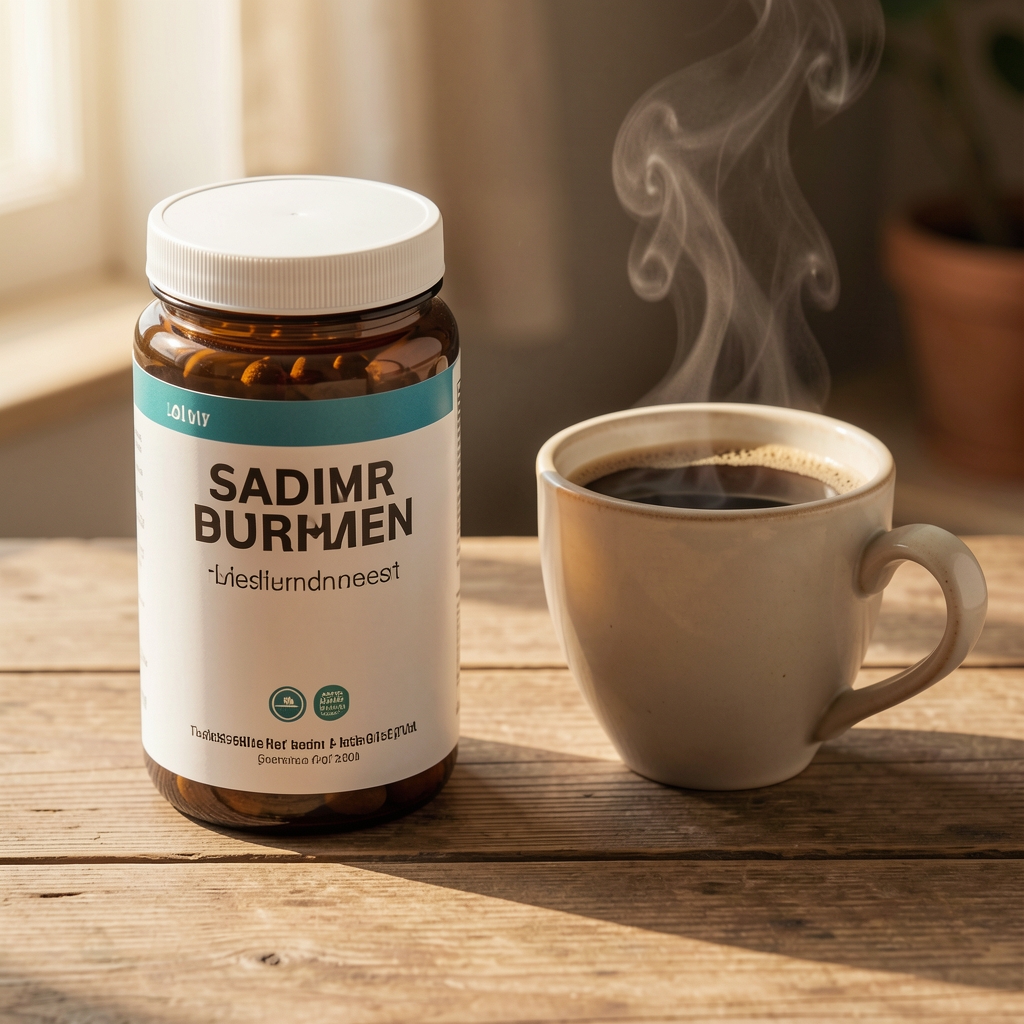
Within the morning window, the composition of the supplement practice varied considerably by lifestyle orientation. Men who described their active lifestyle as centred on gym attendance or structured strength support routines tended to take a broader complement of supplements in the morning: a multivitamin for men, a mineral complex or separate zinc and magnesium, and often a separate vitamin D. The morning was their primary nutritional preparation moment for the day.
Men whose active lifestyle was more movement-oriented — running, cycling, or team sports rather than structured gym programming — showed a slightly different pattern. Supplements appeared in the morning routine, but the emphasis was more frequently on a single multivitamin complex or a combined B-vitamin supplement, with the stated intention of supporting daily energy awareness and stamina through the active day ahead.
A third group — men who described their active lifestyle in terms of general healthy habits rather than structured physical training — took a simpler supplement complement in the morning: often a single multivitamin for men, taken alongside breakfast as part of a broader nutritional awareness practice. The multivitamin-for-men category appeared across all three groups, functioning as the baseline supplement around which more specific products were layered.
"Without a trigger, the practice remained optional in the most literal sense. The supplement container sat somewhere accessible, accessed when remembered — a condition that the field data shows produces an intermittent rather than daily habit."
Adrian Setiawan — Field note, 12 February 2026
The evening window presents a distinct supplementation pattern. Among the men who used an evening slot for supplements, the products chosen differed meaningfully from those taken in the morning. Magnesium featured prominently in the evening routines of men engaged in regular physical training — described by several as part of a post-exercise nutrition awareness practice and as an element of their overall body support routine. The evening supplement moment was often described as quieter, more intentional, and associated with the transition from the active to the resting part of the day.
Omega-3 supplements — contributing to nutritional variety and found naturally in fish, flaxseed, and walnuts — appeared with notable frequency in the evening routines documented. The evening was described by several men as the moment when they could take the time to consider what their nutritional day had included and what it had not. The supplement practice in the evening therefore carried a slightly different character: less about preparation for what is coming, more about completing what the day's food had left open.
The editorial theme that emerges from the February 2026 field observations is one of nutritional rhythm as a function of lifestyle structure. Men with structured active lifestyles — defined routines for movement, consistent work patterns, established meal times — tend to show more consistent supplement habits. The supplement practice mirrors the structure of the life around it.
This finding has an obvious limitation: the field observations documented here are of men who self-identify as committed to active lifestyles and daily wellness. They are not a representative sample of the broader Jakarta male population. What they represent is a specific population segment — the active, nutritionally aware, urban working man — for whom supplement habits form one element within a considered daily wellness practice.
Within this segment, the patterns are consistent. Daily supplement habits are most stable when embedded in daily structure. The specific products — multivitamin for men, zinc, magnesium, B-vitamin complex, omega-3, vitamin D — serve different roles within that structure, but the structure itself is the foundation on which the habit rests. The product is secondary to the practice.
Articles published on Raloven Letters are editorial in nature and reflect the writers' observations on men's dietary supplement habits and active lifestyle routines. The content is not intended as professional health advice. Readers with specific health concerns are encouraged to speak with a qualified health professional.

Adrian Setiawan is the primary editor of Raloven Letters, based in Jakarta. He documents men's daily supplement habits and active nutrition practices across Indonesia's urban centres through field observation and published nutritional research review.
More from this author →