Mineral Notes
Zinc and Magnesium in Men's Daily Nutrition: Field Notes from Jakarta
Adrian Setiawan
·

Jakarta, March 2026 — Whole food sources of B-vitamins documented alongside supplement containers in an editorial still-life arrangement
B-vitamins appear with notable consistency in the supplement awareness of active Indonesian men. From B12's presence in nearly every multivitamin-for-men product to the standalone B-complex supplements observed across Jakarta's working neighbourhoods, the B-vitamin group occupies a distinct and well-documented position in the daily energy awareness of men who describe themselves as active and health-conscious.
The B-vitamin group comprises eight distinct vitamins, each with a documented role in nutritional science. For the purposes of this editorial overview, the field observations focus on those B-vitamins that appear most frequently in the supplement awareness of active men in Jakarta: B1 (thiamine), B2 (riboflavin), B3 (niacin), B6 (pyridoxine), B9 (folate), and B12 (cobalamin). These six appear either in standalone B-complex products or as components of multivitamin-for-men formulations across the full range of products observed in the field.
Published nutritional research notes the B-vitamin group as contributing to daily energy awareness and focus patterns. This framing — contribution to energy awareness rather than a direct energy provision — is consistent with the editorial perspective of Raloven Letters, and it is also consistent with the framing used by the active men documented in this field overview when they describe their reasons for including B-vitamins in their daily routine.
The field observation conducted across Jakarta in March 2026 — a month in which the city's characteristic humidity was elevated, placing additional demands on the physical stamina of active men navigating long working days — provided a particularly useful context for documenting B-vitamin supplement awareness. Several of the men encountered during this period described their B-vitamin supplement habit in terms of sustaining daily output rather than of enhancing it: a vocabulary of maintenance rather than performance.
Among the individual B-vitamins, B12 has the most prominent presence in the supplement landscape of active Jakarta men. It appears in virtually every multivitamin-for-men product observed during the field period, and it is the B-vitamin most likely to be taken as a standalone supplement by men who do not use a full B-complex or multivitamin formulation.
The dietary sources of B12 in the Indonesian diet are primarily animal-derived: meat, fish, eggs, and dairy. Among the men documented, dietary B12 intake appeared broadly adequate given the food patterns described — most were regular consumers of fish and eggs. Yet B12 supplementation remained common. The editorial observation here is that supplement awareness does not always correlate with perceived dietary insufficiency; it can reflect a broader nutritional literacy and a preference for consistent nutritional coverage regardless of what any given day's diet delivers.
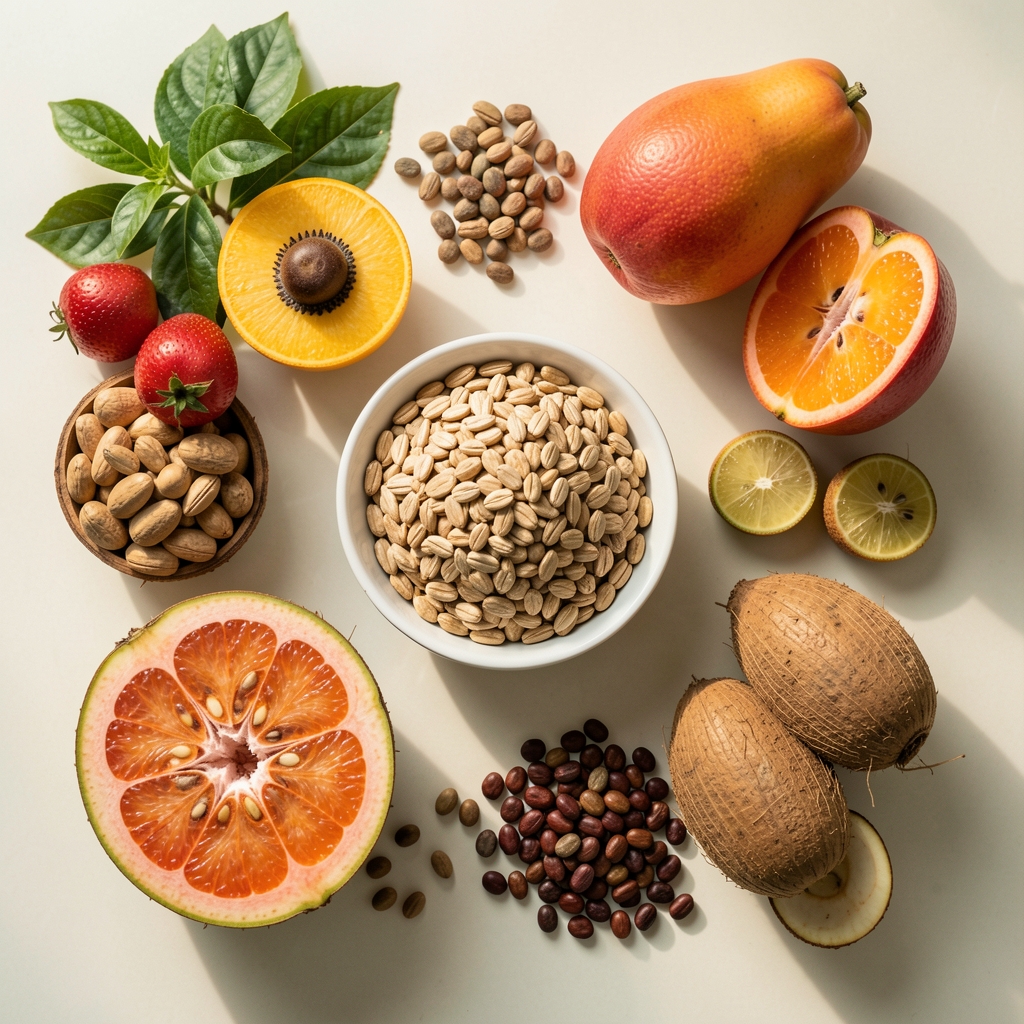
B-complex products — those combining multiple or all eight B-vitamins in a single supplement — were observed with consistent frequency among men who described higher levels of physical activity. The B-complex, as noted in the nutritional literature, provides the full complement of B-vitamins together, and its use appears to reflect a preference for comprehensive nutritional coverage over the selective supplementation of individual vitamins.
Men who described gym-based training programmes, regular long-distance running, or high-intensity cycling as part of their weekly active lifestyle routine were disproportionately likely to include a B-complex in their daily supplement practice. The language used was consistent: the B-complex was described as part of a "foundation" or "base" supplement routine, upon which more specific products — zinc, magnesium, vitamin D — were layered. This framing positions the B-complex as a nutritional anchor, not an add-on.
Dietary B-vitamin sources documented among these men included whole grains, leafy vegetables, eggs, tempeh, and fish. Again, the Indonesian diet provides broad B-vitamin availability; the supplement habit is, in the main, an extension of nutritional awareness rather than a correction of deficiency. The editorial literature on B-vitamins in active populations supports this observation: B-vitamin supplementation in active, well-nourished adults is primarily associated with nutritional completion rather than supplementation of a nutritional deficit.
"The B-vitamin group has emerged, across three months of Jakarta field observation, as the supplement category most consistently described in terms of daily energy awareness — not as a stimulant but as a foundation."
Jason Hartono — Field note, 8 March 2026
The multivitamin-for-men product category occupies a specific position in the Indonesian supplement market — one that has expanded notably in recent years according to the retail observations conducted alongside this field documentation. Within the formulations of multivitamin-for-men products observed, B-vitamins constitute a significant proportion of the active nutritional content, typically comprising B1, B2, B3, B5, B6, B9, and B12 alongside minerals and fat-soluble vitamins.
For many of the men documented during the March 2026 field period, the multivitamin-for-men was the only supplement they used. In these cases, the B-vitamin intake from the multivitamin formulation was the primary supplementation source. This simplicity of approach — one product providing a broad nutritional base rather than multiple targeted products — was described as a considered choice by several men: a preference for a sustainable, low-complexity supplement habit over a more elaborate daily supplement stack.
The field observation supports both approaches as valid expressions of daily nutritional awareness. The single multivitamin-for-men user and the men using a full B-complex alongside targeted minerals represent different points on a spectrum of supplement engagement, not a hierarchy of nutritional virtue. Each approach is consistent with published nutritional research guidelines for active adults in the absence of specific nutritional considerations identified by a qualified nutrition professional.
Jakarta's food environment offers B-vitamins in abundance. The traditional Indonesian diet — centred on rice, tempeh, tofu, eggs, fish, and a variety of leafy greens — provides meaningful natural sources of most B-vitamins. The supplement habits documented in this editorial overview exist within that dietary context; they complement rather than replace a food-based nutritional foundation.
The broader editorial observation is that the B-vitamin supplement awareness of active men in Jakarta reflects a sophisticated engagement with nutritional information. These are not men purchasing supplements on impulse or in response to marketing. They are men who have developed, through reading and observation, a considered view of what their daily nutritional landscape looks like and where a supplement habit adds value to a food-based routine.
This field overview will continue through April 2026, with a particular focus on the dietary B-vitamin patterns observed alongside the supplement habits documented here. The aim is to build a fuller picture of the relationship between whole food nutrition and supplement awareness in Jakarta's active male population — a relationship that, on the evidence gathered to date, is characterised more by informed complementarity than by substitution.
Articles published on Raloven Letters are editorial in nature and reflect the writers' observations on men's dietary supplement habits and active lifestyle routines. The content is not intended as professional health advice. Readers with specific health concerns are encouraged to speak with a qualified health professional.

Jason Hartono is a Jakarta-based contributor to Raloven Letters with a focus on vitamin nutrition and supplementation patterns in Indonesia's active urban population. His field observations are drawn from a background in nutrition journalism and active lifestyle documentation.
More from Raloven Letters →